
NEW: Now open in Spanish Fork · Book today →
Se Habla Español · Orem (801) 226-2606 · Lehi (801) 766-1366 · Spanish Fork (385) 398-7908
If you’re experiencing Neck Pain in Lehi and Orem Utah, Foundation Chiropractic provides personalized chiropractic care designed to help improve mobility, reduce discomfort, and support long-term spinal health. Whether your symptoms developed from long hours at a desk, commuting along the I-15 corridor, sports activities, or everyday stress, neck pain can significantly impact your quality of life.

Thousands of Utah County patients helped at our Orem, Lehi & Spanish Fork clinics.
Many residents searching for a chiropractor for neck pain, neck pain chiropractor, or neck pain chiropractor near me are looking for a conservative approach that focuses on restoring movement and improving function. At Foundation Chiropractic, we proudly serve individuals and families throughout Lehi and Orem with customized care plans tailored to their needs.
The neck is one of the most mobile areas of the body and supports the weight of the head throughout the day. Because of its flexibility and constant use, it is particularly vulnerable to strain, tension, and injury.
Common causes of Neck Pain include:
Many people living and working in Lehi and Orem spend long hours at desks or commuting, which can contribute to ongoing neck pain and stiffness.
One of the most common questions patients ask is: can a chiropractor help with neck pain?
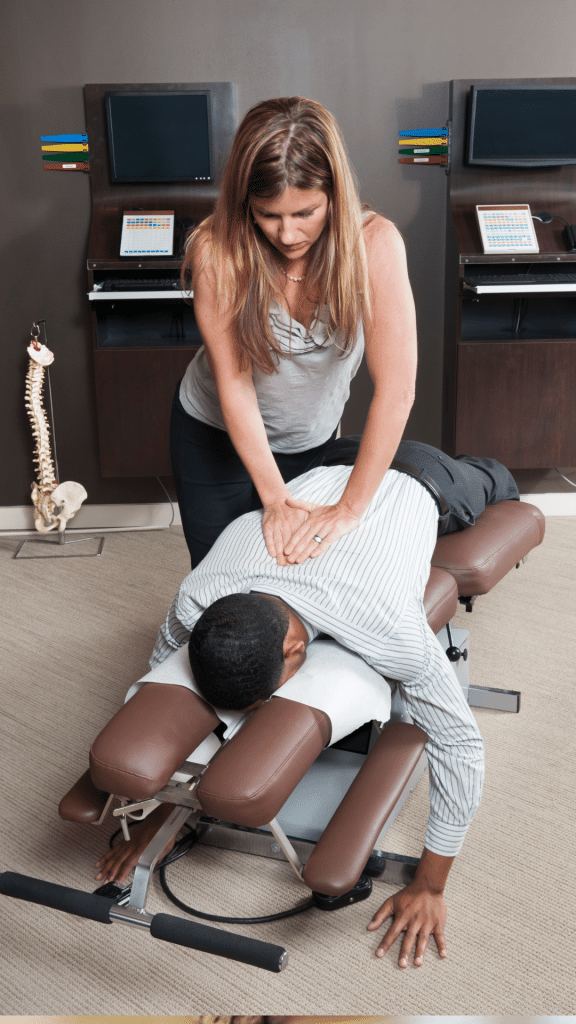
Chiropractors evaluate spinal movement, posture, joint function, and muscle balance to identify factors that may contribute to discomfort. Through personalized chiropractic care, many patients seek improved mobility and better overall function.
The neck and shoulders work together to support posture and movement. When dysfunction develops in one area, symptoms often spread to the other.
At Foundation Chiropractic, we assess the entire movement system to determine how posture, mobility, and muscle tension may be contributing to symptoms.
Patients throughout Lehi and Orem often experience headaches that may be associated with muscle tension and restricted movement in the upper spine.
Our chiropractors evaluate spinal movement, posture, and muscle tension to identify factors that may contribute to both neck discomfort and headache symptoms.
New patients get a consult, exam, X-rays, adjustment, report and massage for just $35. That’s 88% off a typical first visit.
Patients searching for a chiropractor neck pain near me often want to know what their first appointment will involve.
Your evaluation may include:
This process allows our team to determine the most appropriate care plan for your condition.

While many cases of neck discomfort are related to mechanical or muscular issues, severe or worsening symptoms should always be properly evaluated. Our chiropractors perform comprehensive examinations to determine the best course of action.
Foundation Chiropractic provides individualized care plans designed to help improve movement and reduce discomfort.
Treatment recommendations may include:
Many patients seeking a neck pain relief chiropractor benefit from a comprehensive approach that addresses both joint function and muscle health.
Book at our Orem, Lehi or Spanish Fork clinic. Most new patients are seen within 24 to 48 hours, and we accept most major insurance plans.
Residents of Lehi and Orem Utah choose Foundation Chiropractic when searching for a chiropractor for neck pain because of our patient-centered approach and commitment to individualized care.
We provide:
Whether you commute daily, participate in sports, or simply want to move more comfortably, our team is dedicated to helping you achieve your health goals.
If you’re experiencing Neck Pain and searching for a trusted neck pain chiropractor in Lehi and Orem Utah, Foundation Chiropractic is here to help.
Contact our office today to schedule an evaluation and learn whether chiropractic care may help improve mobility, reduce discomfort, and support your long-term health and wellness.
Straight answers from our chiropractors. Still have a question? Our front desk team is happy to help.
Yes, chiropractic care is generally safe and effective for treating neck pain when performed by a licensed and trained professional. Chiropractors use non-invasive techniques that do not involve surgery or medication, and side effects are usually mild and temporary, such as soreness or stiffness.
The number of chiropractic sessions needed to treat neck pain varies depending on the severity of the condition, the patient’s overall health, and other factors. Some patients may find relief after just a few sessions, while others may require ongoing care to manage chronic neck pain.
Yes, chiropractic care can be used in conjunction with other treatments for neck pain, such as physical therapy, massage therapy, and medication. In fact, a comprehensive approach that combines different therapies may be the most effective way to manage neck pain and promote healing.
To prevent neck pain, it is important to practice good posture, maintain a healthy weight, stay active, and avoid activities that strain the neck, such as excessive screen time or heavy lifting. Regular chiropractic care may also help prevent neck pain by keeping the spine properly aligned and promoting overall spinal health.
Claim the $35 new patient special online or call the clinic closest to you. Same-week appointments are common.
A thorough consult, exam and digital X-rays pinpoint what is actually causing your pain, explained in plain language.
Your first adjustment and massage happen that day, with a clear plan to keep you moving and prevent flare-ups.
Rated 5 stars by Utah County families on Google

Get expert care for wrist pain with customized chiropractic treatments designed to reduce discomfort and improve…

Chiropractor for ankle pain in Lehi and Orem, Utah helping improve mobility and reduce discomfort from sprains and…

Chiropractor for ear infections in Lehi and Orem, Utah providing gentle care to support ear health and overall…
Consult, exam, X-ray, chiropractic adjustment, report and massage. An unbeatable 88% savings for new patients at any of our three clinics.
We start with an accurate diagnosis and explain how your symptoms relate to it, plus how a personalized plan can help.
An analysis based on your specific complaints, designed to find the issues causing your pain or discomfort.
Digital X-rays show our chiropractors exactly what is happening with your alignment and structure.
Gentle, targeted adjustments for vertebrae with abnormal movement patterns or that are not functioning properly.
A clear report of everything we found, your experience, and a proposed care plan you can take home.
Massage loosens muscle tension and relieves stress so your body can respond better to care.
*Offer for new patients. Discount not available for Medicare patients.
Takes 30 seconds. We will call to confirm a time that works.